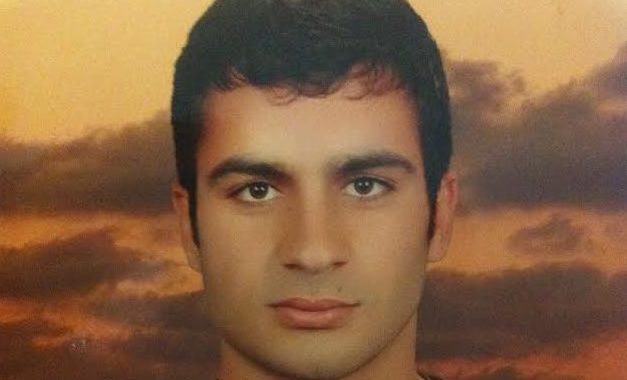
Medeni Yıldırım was killed on 28 June 2013 when gendarmerie officers opened fire on a group gathered in front of the Kayacık Village Gendarmerie Post in Diyarbakır’s Lice district to protest the construction of military outposts. Nine other people were injured in the same incident.
Following the incident, an administrative review was launched. In a preliminary report prepared by inspectors of the Ministry of the Interior and submitted to the Inspection Board of the Ministry on 2 August 2013, it was concluded that the use of firearms against the protesters was unlawful at a stage when the authority to use firearms had ceased to exist. The report further stated that the conduct gave rise to criminal liability. Meanwhile, the Lice Chief Public Prosecutor’s Office declined jurisdiction and referred the file to the Diyarbakır Chief Public Prosecutor’s Office. A confidentiality order was also imposed on the investigation file.
In May 2014, video footage showing the moment Medeni Yıldırım was shot became public. The footage showed gendarmerie officers firing at the crowd. An on-site inspection was carried out nearly two years after Yıldırım’s death.
An indictment issued on 6 July 2015 named only one defendant, Adem Çiftçi, a conscript soldier performing compulsory military service at the time of the incident. Prosecutors alleged that Çiftçi had fired his weapon with eventual intent (dolus eventualis) under unjust provocation, causing Medeni Yıldırım’s death, and requested his conviction.
The trial began before the Diyarbakır 7th Assize Court. The first hearing was held on 27 October 2015. Defendant Adem Çiftçi attended the hearings via SEGBİS. At the second hearing, he stated that he had acted on orders from his commanders to open fire. Lawyers for the Yıldırım family requested his detention and argued that members of the military chain of command should also be investigated and prosecuted. These requests were rejected. In later statements, Çiftçi claimed that he had not fired his weapon at all and that he could not see Medeni Yıldırım from his position.
In the prosecutor’s opinion on the merits submitted during the first round of proceedings, it was stated that it could not be established that the bullet that killed Medeni Yıldırım had come from Adem Çiftçi’s weapon. The prosecutor also noted that the defendant denied firing his weapon. On that basis, the prosecutor argued that there was no concrete and convincing evidence proving that Çiftçi had committed the offence and requested his acquittal.
At the hearing on 8 November 2016, lawyers for the Yıldırım family pointed out that various reports had established that 27 different firearms had been used during the incident. They argued that the proceedings had nevertheless been conducted against only one defendant and requested a broader investigation. The court rejected the request and acquitted Adem Çiftçi in line with the prosecutor’s opinion.
The acquittal was appealed. The 1st Criminal Chamber of the Gaziantep Regional Court of Appeal unanimously quashed the judgment. The Chamber found that contradictions between Adem Çiftçi’s statements at different stages of the proceedings had not been resolved. It held that the crime scene sketch, security camera footage, witness statements, the defendant’s testimony, and the physical evidence should be assessed together. It also ordered an on-site inspection and further expert examinations to clarify inconsistencies in the existing reports. In addition, the Chamber requested an expert report to determine the direction from which the shots had been fired based on the available footage.
The retrial began on 21 December 2017. At the first hearing, the court excused the defendant from attending future hearings. An on-site inspection requested by the Regional Court of Appeal was initially scheduled for 20 March 2018. However, at the hearing on 22 May 2018, it emerged that the Lice Criminal Court of First Instance had been unable to carry out the inspection due to security concerns. The court therefore issued a new instruction ordering that the inspection be conducted without delay.
An on-site inspection was eventually carried out on 17 September 2018. At the hearing on 27 September 2018, lawyers for the Yıldırım family argued that heavy weapons had been used during the incident. They also noted that none of the senior officials alleged to have ordered the shooting had been questioned as suspects. They again requested that the investigation be expanded. The court decided to await the reports to be prepared following the inspection.
At the hearing on 7 February 2019, the expert report prepared after the inspection was submitted to the case file. The court ordered an additional expert report from TRT so that the audio recordings and video footage in the file could be assessed together with the inspection records and expert findings. After TRT stated that it lacked the technical capacity to prepare such a report, the court decided on 16 May 2019 to obtain an expert opinion from either TÜBİTAK or the Council of Forensic Medicine.
At the hearings on 17 October and 17 December 2019, the expected technical reports had still not been completed. The court sent further requests to the Council of Forensic Medicine, TÜBİTAK and TRT. It also inquired about the outcome of a separate investigation opened in 2016 to identify any additional perpetrators. The Diyarbakır Chief Public Prosecutor’s Office responded that a decision of lack of jurisdiction had been issued in investigation no. 2016/39328 and that the file had been transferred to the Lice Chief Public Prosecutor’s Office.
At the hearing on 20 February 2020, the court requested a report from the Diyarbakır Criminal Police Laboratory. The report was intended to determine whether a single pull of the trigger on a Bixi machine gun could discharge ten rounds. The court also ordered that the security camera recordings be sent to TRT for enhancement of the audio quality using advanced technology. At the hearing on 22 October 2020, the court stated that a criminal complaint could be filed if the Criminal Police Laboratory failed to respond. Lawyers for the Yıldırım family again requested the detention of Adem Çiftçi, but the request was rejected.
By the hearing on 4 February 2021, several reports had been added to the file. These included a report by the General Assembly of the Council of Forensic Medicine concerning the entry and exit wounds and trajectory of the bullet that killed Medeni Yıldırım, a response from the Ankara Gendarmerie Criminal Bureau regarding the Bixi weapon, and the report prepared after the on-site inspection. TRT informed the court that it had been unable to improve the audio quality of the recordings to the required level. Lawyers for the Yıldırım family objected to the inspection, arguing that it had been conducted in the absence of the parties. The court decided to send the file to Istanbul Technical University for a new expert examination in order to address the deficiencies identified by the Regional Court of Appeal.
At the hearing on 25 May 2021, Istanbul Technical University informed the court that it had been unable to prepare a report because no suitable expert was available. Lawyers for the Yıldırım family requested that other institutions capable of conducting the examination be identified. The court rejected the request, found the existing reports sufficient, and referred the file to the prosecutor for preparation of the opinion on the merits.
At the hearing on 8 July 2021, the prosecutor submitted the opinion on the merits. The prosecutor argued that soldiers had fired warning shots into the air in order to disperse the crowd and prevent the situation from escalating. According to the prosecutor, Medeni Yıldırım died after being struck by a bullet during this intervention. Because no bullet was recovered during the autopsy, it could not be determined whether the fatal shot had been fired from Adem Çiftçi’s weapon. The prosecutor further noted that Çiftçi denied firing his weapon and maintained that the location of the Bixi machine gun he operated did not provide a line of sight to where Yıldırım was shot. On this basis, the prosecutor requested the defendant’s acquittal.
Lawyers for the Yıldırım family objected to the acquittal, arguing that the deficiencies in the investigation had not been addressed. The Diyarbakır 7th Assize Court nevertheless acquitted Adem Çiftçi. The court found that there was no sufficient evidence to establish that Çiftçi had committed the act that caused Medeni Yıldırım’s death.